
Is that it?!

Contents
Chapter 4
Doing it is easy - getting there is hard
Addition for the m/other-us-all
Introduction
The last couple of posts have been tough to write. It’s been hard to uncover the direction or theme that my tacit maternal knowing wove into the fiction when I wrote it, holding in mind the question at the heart of this open-air Heuristic Inquiry: how do we take the idea of tacit maternal knowing and let it show up, guide, and stabilise our work-based practice, whatever that work may be?
In Theraplay, we think about resistance as being the point where the work takes place, because that is where new possibilities might be forged. I don’t like the feelings of stuckness, incompetence, lostness, confusion, rage - the multitude of feelings that go alongside not knowing - but it is in this experience that there is the potential for new understanding to emerge. It’s nice to have company in this place of unknowing.
I had a couple of email comments arising from last month’s post. Thank you. My hope has always been that this space can become a community of practice where ideas can be critiqued and queried - in the spirit of Theraplay and our m/other tongue - because it is through that relational exchange that ideas can be scrutinised, polished, and, sometimes, debunked.
All comments inform my thinking in engaging with the monthly task of this open air Heuristic Inquiry. The ones that come by email I digest privately, and those that are added to Substack can be digested by us all as we contemplate how we do our best practice in the service of others.
In this month’s fiction, the children are collected from the service station by their parents and carers. It is a 4,000-word chapter from a 40,000-word novella. At first, I thought that the rescue of the children would be the grand finale of the fiction. Yet, through the process of writing, it became merely an incident within something larger. The children disappear into the night and…so what?
The fiction asked me, and continues to compel me, to reconsider what needs to be made visible before the operationalisation of our m/other tongue can be shared. My hope is that by the end of this five-year research endeavour, I will be able to offer that in a more concise way. To use the changing bag metaphor, at the moment I am still exploring supplies for the bag and considering how they might be useful in enabling people to thrive. At the end of the process, I hope to be able to share a more neatly packed and labelled bag with the world.
19:45
Mia and Jacob went to join Dhillon, Arthur, and Olivia, who were playing video games with Yasin.
“I just need to talk to Mr and Mrs Ingrams,” Daniel told them, oblivious to the fact that Val would be writhing in embarrassment if she overheard his misreading of her connection to Graham.
He remembered a parent once saying, “Why aren’t you more friendly with the kids? What’s wrong with using first names for adults?” Daniel had needed to be firm. “I’m not here as their friend. I am a grown-up and I lead them. I will earn their respect, and I expect them to show that respect.”
That parent didn’t come back.
Many others expressed scepticism about his methods, which seemed to be neither discipline nor friendliness. Some even sneered at the play he integrated into every moment of his contact with the children. But Daniel had always known, in his bones and his guts, that friendship was not the issue here. Mothering was what had been lacking. And that earliest mothering, moving into fathering and parenting, was what he needed to provide before the children he cared for could flourish, as learners as well as people.
He explained the plan to Val.
“The problem is I can’t walk it through on the other side. If I leave the children, it will rattle their Structure too much. We are only just holding it together.”
Graham looked at the children leaning into staff members, appearing occupied, relaxed even, despite putting on his ‘mammal reading glasses’, as Val had called it when they talked about understanding bodily communication in their different professional lives.
Val, though, was picking up the intensity of the grown-ups’ work to remain relaxed while absorbing, noticing, and releasing the tensions in the children. She could see how hard they were having to work, even if, to the unattuned observer, it looked like they were doing nothing. Those grown-ups, in turn, needed Daniel to contain and digest their growing concerns.
“I’m assuming the layout is a mirror of this, but I don’t know,” Daniel continued. “Sandra said they’ll let me know as soon as the parents and carers are onsite and walking towards the entrance. They’re not going to come into the building. We want to get the timing right so they don’t have to wait too long for the children to come out to them. No way can the children be waiting for them to appear.”
“Got it,” Val said. “I’ll time it and look for the snags. What do you want Graham to do?”
“Sheepdog,” Daniel said.
Graham looked a bit bemused, but Val knew exactly what Daniel meant.
“When we walk the children over, you need to be at the rear to keep the herd intact,” she explained.
“Oh! Got it,” Graham said, aware that he had adopted the same ‘can do’ tone of voice Val had used, even though he was not quite sure that he did get it. But he was ready to give it a go, and ready to let himself draw on the pictures in his mind of the sheepdogs of his childhood in Northumberland. It felt right. His head tilted as he quizzed himself on whether ‘feeling right’ was an acceptable thing to trust.
“You stay here,” Val said to Graham, seeing that he was a bit out of his comfort zone and processing. “I’ll go and have a look at the route. Daniel, any particular things I need to be aware of?”
Daniel gave her the rundown of triggers: strong smells, flickering lights, loud noises, clowns, and, for some reason, teapots.
Val raised her eyebrows at that one – not that such an object could be a trigger source, but that children of that age actually knew what a teapot was. People seemed to find her tea-making rituals, with leaves and a pot and a cosy and a strainer, rather bizarre and quaint.
She stood up and stretched, taking a moment to look around the room.
They were all, all the people in that room, every one of them, in a strange situation. At some level, all were stressed and primed for survival. Anything unusual could send out a ripple, and the ripple could easily become a contagion, and that contagion become unpredictable. The ripple could become communal care, or it could become individual preservation. If that happened, if survival kicked in, if people thought there was a way out - would they surge?
She started to pick her way across the food hall. “Sorry! Excuse me! Whoops.” All offered with a disarming smile.
She reached the doorway that led out into the lobby area, where you could head off towards the toilets or go into the newsagent or the mini supermarket. The shops were barred, their grilles pulled across. In the newsagent, she could see a worker just sitting there, staring into space.
Val’s face couldn’t help but smile. A person always deserved to be seen and deserved a smile. Such smiles seemed to send out vibrations through the air.
Christiana looked up and made quizzical eye contact. Val waved to her. Christiana half lifted her hand, but seemed unsure what to do.
“Can I help you?” she called to Val through the grille.
“No, you just looked a bit lonely there,” Val said. “Are you okay?”
The young woman came over to the grille.
“Thank you,” she said. “I didn’t think anyone noticed me. I can’t get home either, and I didn’t think I should leave the shop.”
“Oh, it’s quite something, isn’t it?” Val said. “Do you know what’s happening on the other side of the road?”
“No. We’ve got a place there too but...” She shrugged. “I don’t know the people there, so what’s the point?”
“I’m just going to see how they are doing,” Val responded.
She smiled at the young woman again and was rewarded with a return smile. The mutual, unpurposeful exchange somehow gave them both a bit of purpose: backs a bit straighter, strides a bit stronger, smiles a bit more relaxed. A little anchor in the unknownness.
Val worked her way towards the stairs that led to the bridge over the motorway. Various couples sat on the cold concrete, leaning against walls, higgledy-piggledy across the steps. Even though it seemed no one was going anywhere, the built-in politeness of normalised human behaviour meant they had all left a navigable route through.
It was still difficult for Val though. Picking her way through gaps meant she couldn’t hold the handrail. Trying to move her ankles and knees after so much sitting on a floor in an awkward position sent flashes and trills of discomfort, and the odd screech of pain, through her joints. She couldn’t stop the discomfort registering on her face.
There was the ripple, and people shuffled.
The capacity of people to register others amazed her time and time again. The ripple spread and, magically, the handrail became available to her. It gave her confidence that when they led the children through, an equal courtesy and kindness would be extended to them as a communal ripple, not an individualistic one.
She reached the top of the steps and stood, expecting this space to be filled too.
But no.
A grey expanse stretched before her, the windows tinted to obscure the outside world. A suspension of nothingness across cars that no longer moved below. The half-lighting of the emergency generator gave the place an unsettling shadowiness.
She shuddered, feeling five again, feeling herself squatting down and looking out over the traffic. At the same time, she felt the discombobulation of the weirdness of now. She felt stretched across the ages, never mind from one side of the motorway to the other. She felt thin and taut and had to consciously tell her feet to move.
The childlike sense of this being a space station, something beyond normality, closed over her like the overstretched bubble gum she had envied in others as a child. Too vulgar for her to be allowed, but cool and strong when she saw others blowing their bubbles - then messy and humiliating when the bubbles were overblown and plastered themselves suffocatingly to the blower’s face.
She found herself watching her feet as if to make sure they remained on the decking, that she didn’t start to float in some sort of rarified atmosphere. Her eyes became mesmerised by the gaffer tape that held the floor together, its grey silveriness adding to the otherworldly feel.
“It’s just the floor covering,” she tried to assure herself.
The tape was only holding the floor covering together. The bridge itself was sound. They’d close it otherwise, wouldn’t they?
Who were they?
Where was she to place her trust?
The eeriness kept building. The expected sounds of traffic had been replaced by the thrumming of rain on the roof. It seemed to be some sort of plastic, so the rain created a hollow sound with a deadened, off-beat rhythm. She couldn’t describe it.
Looking up, as if that might help her find words for it, she could see the gaffer tape extended upwards to seal gaps. She half expected rain to gush through at any moment.
As she moved forward, the greyed-out windows became clear, and she was able to gaze out over the cars. Both sides of the motorway were solid. The northbound side stretched as far as the eye could see in both directions. The southbound side showed maybe some imperceptible movement. The lights of the cars were at least still lit on that side. Northbound drivers had clearly given up and turned off engines and lights, probably, she thought, abandoning the cars for the illusory comfort of the service station.
She felt overwhelmed by the journey. She noted sound, she noted sight, she noted the peculiar feeling under her feet that was not her emotion but the texture of the flooring – every bump and wrinkle, every stretched-out bit of tape. Every noting on her part was a message of love to the children she was hoping to support in their particular crossing of the bridge between worlds - between stuckness and loving known-ness.
And then, just like that, the suspended animation was over.
Her feet hit a concrete slab at the top of the stairs on the other side and it was like a jolt through her.
Solid.
Back into people using the stairs as a place to sit. Not quite so crowded, less higgledy-piggledy. Here, she could hold the rail without people having to move to accommodate her.
She descended to the other side of the road, a sort-of-the-same but also totally different place.
The outlets hadn’t closed their shutters. There was more movement. People were still excited and entranced, touching possible purchases, waiting for the if-and-when of the cash machines coming back to life. Such preoccupations made it more difficult to navigate from the steps and through the entrance hall. The crowds here had just enough to distract them from being aware of a traveller from outer space trying to make sense of the peculiar place she had landed, knowing she would need to lead her people through.
To Val, it felt oppressive, noisy - too many people, too close to be comfortable. She had to push through, unable to see the right direction but trusting the exit would appear, pulled by some sort of below-the-level-of-thought sense about how to get out. Here, too, the lights were dimmer, the sounds of gaming machines silenced; but it was restless, not still like on the other side. Elbowing through was like moving through mud, thick and clinging, unpleasant and not of anyone’s specific making.
She almost gulped the night air when she made it out of the doorway. She looked around, half hoping parents and carers would already be there. Hoping, bizarrely, that her mother would be there, someone to scoop her up and say well done, you’ll be okay now, we’ll take you home and you will be okay.
She noted the canopy. A rising arc of steel, she thought - or at least, some shiny material. It was only pretending to protect people from the elements, ensuring no one stayed there too long, no matter how far they had travelled. It put her in mind of a spaceport that was about to eject its astronauts.
The canopy’s arc was mirrored on the ground by a semicircle of brick paving stones and a statue in the middle, graffitied and hung with rubbish bags as if it were some sort of deranged Christmas tree. But at least it was a landmark, an object to work towards.
Val felt as though she was approaching it like a mouse, all eyes and quick movements, trying to check out its safety, its name, its function, its smell and texture. It had a plaque, a description of intention: in recognition of this place once being a site of pits where clay was dug for the making of bricks by immigrant labour. Now the immigrant labour just served fast food of no nutritional value at soulless counters.
Val stored the detail in her mind – meet at the statue commemorating clay, the holding of the mud together.
She started her return journey, trying to note any further possible trigger points or points of refuge. Watch for the journey through the choppy waters of the entrance lobby, keep the focus up the stairs, journey through the other world of the bridge.
Then she was back to the damped-down spirit of their place of refuge - or imprisonment, she wasn’t sure which. Back to somewhere that was more familiar, even though it was a mirror of what was on the other side.
The woman in the newsagent was still there. Val smiled at her again, and this time the wave back was more sure and positive. Christiana came over to the grille.
“How’s it looking over there?” she asked, as if it were another continent.
“Busier,” Val said. “The shops are still open even though the tills aren’t working.”
“Oh.” Christiana looked a bit crestfallen. “But I didn’t think I could protect the stock.”
Val wasn’t sure if she was rescuing Christiana from her concern about whether she had done the right thing, or whether she, Val, had had a sudden stroke of genius. She had been worrying about how they were going to get all the children out of the crowded food hall without unintentionally starting a wave of movement, and without the children getting over-aroused and thus likely to explode.
She explained the situation to the still nameless-to-her young woman.
“If we bring them here a couple at a time, would they be able to stay in the shop until we have the whole group together?”
Christiana looked perturbed. She wanted to help, but she had to say it. “No. No, I can’t open the shop or who knows who will come in.”
Val could see it was hurting her not to help and waited a little longer, not wanting to leave her while she was still processing the tension between her desire to help and the injunctions against anything that might harm the core business of the store. Christiana was also worried that she had given up too easily, that she should have made more effort to keep the shop open and maximise selling potential. This wasn’t selling potential, but somehow it still made her feel better, something she could do.
She suddenly perked up.
“Come over here!” She pointed to Val’s right as she moved left within the shop. “See that door?” Her voice got a bit louder as she started to move back into the shop. “Wait by that.”
She disappeared.
Val couldn’t see where she’d gone and wondered if she had perhaps played a ruse to get out of the uncomfortable situation. She stood by the door, which was grimy and blended into the background. It didn’t look like it was used very often, except as a target for kicks and a resting place for soles as people leaned against it.
Val could barely tolerate waiting any longer, knowing Daniel would be wondering what she was doing and thinking the journey would take too long. Then the door moved, jerking as if someone had to tug it hard. It opened enough for the woman to peek through a gap.
“Can you push from your side?”
“Sure,” Val said, looking around and wondering if people were watching what was going on. If they were, they were hiding it well.
She put her shoulder to the door and gave it a shove. It scraped over the floor for a moment and then flew open. Val nearly fell into the room.
It was bare, dusty. There were no seats, no windows. But it was quiet and fairly spacious.
“It used to be a storeroom, but now we have just-in-time deliveries,” Christiana explained. “Would this be okay for the children to wait?”
“Thank you,” Val said. “It would be perfect.”
The woman glowed with pleasure at being able to offer something of value. She introduced herself: “Christiana Ferrari,” she said, holding out her hand awkwardly: it would have been more customary for her to exchange cheek kisses.
“Val Ingrams,” Val replied, looking at the hand and taking it, also feeling awkward. Her customary gesture would have been to smile and make eye contact. In the eye contact they made now, there was a flicker of a giggle, as if they both realised how their formality was driven by discomfort yet only created more of it.
They exchanged mobile numbers so that Val could let her know when the first children were on their way. Val saw there was a message from Joe, but for the moment there was no time to worry about the house in Bournemouth.
Val picked her way back through the various seated families, drivers, and other people just waiting, not knowing when they would be able to exit this temporary interruption to life. She looked at her watch. She felt like she had been gone a lifetime, but it had only been ten minutes.
“What do you think?” Daniel asked. He was starting to look stressed, his eyes darkening with tiredness. The children were getting fractious, and the staff were having to work even harder to distract and contain them.
Val filled him in.
“Tell the parents to meet us by the statue to the brick makers,” she said. She told him about the room the children could wait in, and how the tricky bit would be the bridge and the noise and movement of the lobby on the other side.
“Do you reckon they will cope?” Daniel asked. It was a sure sign of the stress he was under, not able to judge for himself when he was the one who knew the children best.
“We can make the bridge fun,” Val said. “The lobby will be tricky, but if we can get everyone to stick together and the carers are right there ready to go, we can just get through.”
Daniel let out his breath in a long exhalation. “I’ll be so relieved when they are safe.”
“Do you know if the parents are there yet?”
He checked his phone. “The police have them parked and are now walking them into the service station via a back entrance. Let’s start moving the children.”
To anyone not in the know, it looked as if a school party was taking the children in their care to the toilets in small groups.
Daniel and Val started with Jacob and Mia.
To Val, it felt like a Secret Service drop – a prearranged knock on an anonymous door to confirm that it was them.
Christiana was ready to pull the door open and sneak them in, alerted by Val’s text. Val introduced Daniel. Daniel checked with Jacob and Mia.
“If you stay with Mrs Ingrams and Miss Ferrari, I will be back with Kian, Jayden, and Nina very soon.” He paused. “You look like that worries you, Jacob?” he said, half statement, half question. “I reckon you will only get three games of air thumb stacks done before I get back. What do you think, Mrs Ingrams?”
Val smiled, recognising the technique and impressed at how embedded Daniel’s use of Theraplay was. She clucked her tongue against her teeth and drew in a breath.
“Well, Mr Pettingrew, you know air thumb stacks are the hardest.”
Jacob chipped in. “I can help you with them,” he said. “We might not manage three, but I’m sure Mr Pettingrew won’t mind.”
“Thank you for your help, Jacob,” Val said, her smile soft and warm.
They retreated further back into the room and started to negotiate how far thumbs had to be apart and still feel the warmth of one from the other.
“Mia,” Daniel said. “You go and keep an eye on them.”
“Yes, sir,” she said, and went to wait.
Daniel winked at Christiana, who was wide-eyed at the way Val and Daniel had managed a scared boy who looked like he could have kicked off at any moment.
The shuttle of children took less than ten minutes. The Theraplay activities in the storeroom morphed into group activities, and before long Christiana was joining in too. Val hadn’t had this much fun in ages. She was almost sad when Graham arrived, indicating that everyone was now here.
Daniel clapped his hands twice and then held them up in the air. Val realised he was trying to get everyone to focus on him, and so followed his movement in a non-verbal game of follow-the-leader. Soon the whole group was clapping, then lifting their hands in unison.
Once everyone was connected, Daniel held his hands up and started to tell the group what was going to happen next. As he spoke, he slowly lowered his hands, everyone else following suit.
“We are going to follow Mrs Ingrams. She is taking us on an adventure to the other side of the motorway.” He knew it was too soon to tell them about their carers; they would want to move too quickly and in an unruly manner. “Mrs Ingrams, over to you!”
Val had almost forgotten the irritation of “Mrs” being added to her name in the pleasure of using her Theraplay skills constructively again.
“Everyone needs to be in a line holding the elbows of the person in front of them,” she said. “Jacob, you can start by being behind me. Here are my elbows.”
She pushed her arms back and felt him take hold.
She could hear Daniel marshalling the others into the line and Graham being shuffled into the last position. They all had to be close to each other to keep hold of the elbows.
“We are starting with the foot closest to the wall with the poster on it,” she called out. She nodded to Christiana, who was ready to open the door for them.
“Here we go,” she said.
There was no time now to wonder if they were being looked at. Her focus was solely on picking up the vibrations from the group behind her. How far could she get them like this before she needed to change the activity to keep their focus? How could she morph this structured activity into something that channelled anxieties through meeting a challenge?
They were part way to the stairs when she felt the grip on her elbows loosen. She glanced back. The line behind her no longer looked secure. She felt in her pocket – a balled-up pair of gloves were there. She passed them over her head to Jacob.
“Under your legs,” she said. “Then over the head again. When it gets to the back, the last two people in the line have to come to the front.”
It was just enough challenge to keep everyone involved, never leaving anyone navigating the space on their own. As people concentrated on whether they were going over or under, she inched the line forward. Jacob was now on the first step of the stairs; people moved aside to let them through. One round of under and over was enough to get the whole party to the top of the stairs and into the eerie, half-lit grey of the bridge.
“We’re going to walk like astronauts!” Val said, adopting a funny, wide-legged gait.
At the other side, Daniel gathered the group around him. “Okay, everyone - it’s now time to go home. Your grown-ups are all waiting for you outside the building downstairs, and you will be going home with them or back to school in another minibus.”
There was a babble.
“Listen, everyone.” Daniel held up a hand to give them something to focus on. “It’s noisy down the stairs and there are lots of people. It will be 125 steps from the bottom of the stairs to outside the door. That’s ten steps per finger, plus two fingers and half a thumb more. So you need to get into groups to count the steps, and you need a grown-up so you can help them count. If I’ve got the step count wrong, you can tell me when we are by the statue of people making bricks.”
The man’s a genius, Val thought. The children were grouping around the adults, asking them if they wanted help to count. They felt important, and invested in staying with that adult. As strangers, neither she nor Graham were selected. It was as they expected. It meant she could lead the group of groups through the lobby, and Graham was the last to leave the steps, trying to keep tabs on anyone who looked like they might stray.
It was a huge relief for Daniel and Val as each group reached the door and emerged into the dark air filled with rain. Worry was forgotten as the children saw the most important people in their lives – their parents or carers – and were wrapped into embraces and swept away, disappearing into the night.
Doing it is easy - getting there is hard
I was going to give this post the title “you’ve been tango’d; the body aesthetics of tacit maternal knowing”. You may have noticed I quite like a good title, but even by my standards that felt a bit esoteric!
It was inspired by A Somaesthetics of Performative Beauty (2023) by Falk Heinrich. I came across it while trying to make sense of Val, how she moved the children, and why the rescue of the children – intended as the denouement of the fiction – ended up taking up such a small space in the overall scheme of things. This was my first introduction to somaesthetics, and I’ve since discovered there is even a journal, aptly named The Journal of Somaesthetics, devoted to it.
The term somaesthetics was coined by Richard Shusterman to foreground felt, embodied experience as a positive and significant dimension of aesthetic philosophy - that is, the study of what is perceived as beautiful, meaningful, and worthy of appreciation. Drawing on a range of sources (Zamorska, 2018; Höök et al., 2018; Radman, 2012; Shusterman and Sartwell, 2025), identified through Perlego’s AI research assistant (which I feel explores a reasonable range of academic material and so is ethical and proportional in my pursuit of the smash and grab process of practitioner research), my sense-making of the term is this:
Stay with me here - I will put words to my understanding of somaesthetics in addition to the above visual presentation!
One of the papers that appeared as I immersed myself in the literature was Toner and Montero (2020), published in the Journal of Somaesthetics, on the value of aesthetic judgements in athletic performance. It opens by mentioning Roger Federer, among other elite athletes, noting that they “move in aesthetically valuable ways, as is plain as day to any spectator” (p.112). However, the paper’s focus is on aesthetics as experienced by the performer.
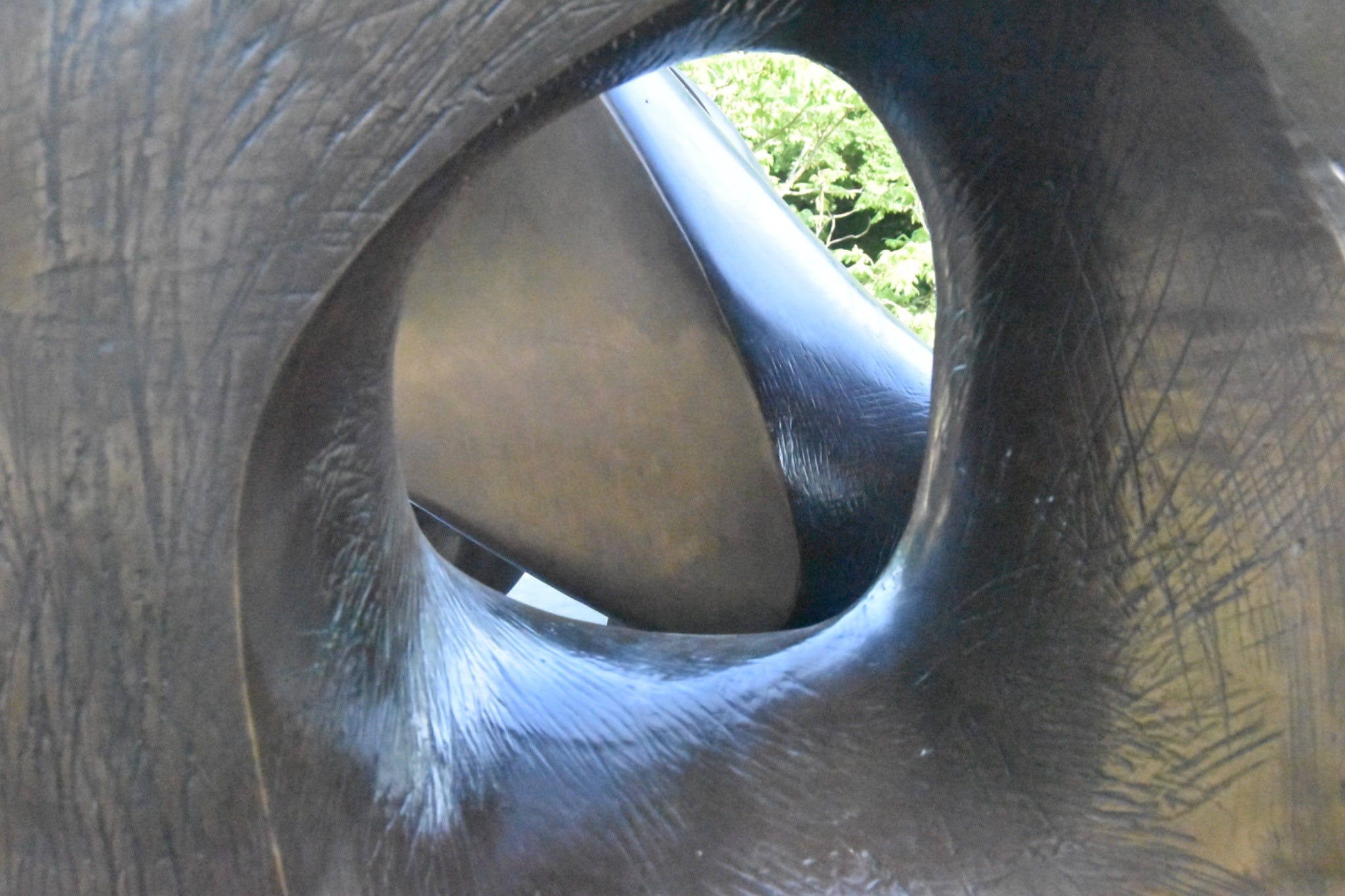
It brought to mind Tracy’s (2010) work on quality in qualitative research, and how artisan cheese makers recognise ‘good’ cheese by ‘mouth feel’. These qualitative experiences of ‘good’ and ‘mouth feel’ may differ across cheese types, but there is tacit agreement among experts about what those terms point to. Henry Moore’s sculptures have always had good ‘mouth feel’ to me; his shapes and forms connect my eyes with the somatic experience of oral satisfaction. I was delighted, while my editor and I were immersed in the Moore exhibition at Kew Gardens, that a young man did what I really wanted to do myself (but was too ‘proper’ to do so) - hug, tap, smell, and taste the sculptures.
The grown-up with him felt the need to explain that he’s autistic. I was sad that she felt obliged to offer an explanation, or that I feel the need to mention it too. It gave me delight to witness and, I hope, brought him delight to experience. Why should there need to be any explanation beyond that?
Somaesthetics, to me, conveys something about how action/object/connection feels-right, not in a merely self-serving pleasurable sense, but in a communal or relational one: crowd and athlete, cheese and eater, dancers in tango. Partners connected yet distinct, joined by a felt sense of rightness. Is this a step beyond the felt-sense-of-safety discussed in previous posts (On becoming a wise child and Health before wealth, peace before power) as a foundation stone of flexible, creative relationship?
Sportspeople, tango dancers, and cheese makers may feel a long way from our practice as therapists, therapist educators, researchers, and managers of organisations who care. However, in this fiction, Val is back to being Theraplay, enabling children to navigate difficulties through high-quality, connected, attuned, playful relationships. She loves it. It feels good. It is about embodying all the stored up wisdom she holds. Although she is doing Theraplay, it comes, in the first place, from being Theraplay. Of course, those two are intertwined.
Graham works out his role by ‘feel’, not by knowing. The feels-right of the process sits at the centre of things. How Val, Graham, or Daniel think is not central, nor is what they do central to the story. They are absorbed in providing the children with what they need, regardless of how they may be perceived by people sitting on the stairs. Even within this absorption, the value of human connection through ‘rippleness’ is taken into account.
Heinrich takes the lived experience of being in tango as the embodied point of reference for developing a word-picture-map of that experience (or a philosophy, in the wordy-words I am trying to get away from in exploring the feels-right of what guides us in our m/other tongue). The focus of that theory is about tango being the conduit for experiences of connection, pleasure, and beauty.
Reading it, I found myself thinking that this is more or less the same as the experiences of mothering that I am trying to use as the primary reference point for generating knowledge to create a word-picture-map of tacit maternal knowing. It also brought to mind riding horses, another context in which two bodies must find a non-verbal relationship and partnership, within which power is shared and passes between, sometimes one being more powerful, sometimes the other, sometimes neither. When aesthetically coherent, this exchange becomes seamless.
Returning to the fiction, I wonder whether this underpins the ‘mammal glasses’ Graham uses to infer his role in the pack or herd he is being co-opted into. Is a shared sense of aesthetic rightness a sign of living out felt-sense-of-safety out in the world? These may be questions to come back to another time.
Heinrich describes beauty in performance as the pleasure of being both instigator and follower within the relationship between dancers. I read this as the pleasure of being moved, and of moving others. I hear it as resonant with the dependence–interdependence strand of tacit maternal knowing identified in my original doctoral research.
It was notable that I could see the parallel between tacit maternal knowing and tango, and could recall, at a somatic level, parallels with riding horses and tango. The element that sets tacit maternal knowing apart is that the primary reference point is the mother–infant dyad, rather than horse and rider or dancing partners. However, this line of exploration – this ongoing untangling of how to operationalise our m/other tongue – keeps pulling me back to bodies, bodies, bodies, and how they connect as a way of navigating worlds that feel alien.
Not bodies simply doing something, nor bodies simply feeling something, nor even bodies simply knowing something. The question becomes: how do we centre embodied knowing within our leader/followership (see Conducting kinship…that’s what mothers do and The master’s toolbox is very deep (and sticky)) in a world that frames those positions as binary and hierarchical rather than unified and equal in power.
Heinrich includes a quote from this YouTube video. The quote, and the video, feel central to whatever it is I am groping towards this month:
When you stop but hold the connection, something happens, something deeper, something almost mystical, some people call it, and this thing gets magnified in this moment…It takes your total attention to hold it, to not let it fall, to sustain it. This is the secret; this is the magic…this is the beauty of tango…this stop is the fundamental unit, the silence, the pause, the zero position. (Richards, 2018, cited in Heinrich, 2023, p.25)
It is worth watching the video. It is in the pauses, the null spaces, that the magic is made. The magic I am pointing to here is the feels-right of relationship that enables expansive, joyous living. Around those null spaces – to create those zero positions – there is extensive rehearsal and ritual: the clothes, the mastery of muscle in specific movements, the places, the music, the tradition, history, identity. But in the moment of pause, that moment of meaning, beauty, and transcendence, none of the prior work matters, except that it matters fundamentally in the making of the null space. Meaning is generated in the null spaces between relationships of bodies when doing, feeling, and thinking, stop.
Why am I going on about this? How does this connect with the real world, and with the operationalisation of our m/other tongue?
The fiction is, in some ways, mundane: nuts and bolts work in which Val leads children and teaching staff from one crowded side of a motorway service station to another, using Theraplay-informed techniques, so that parents and carers can collect them and take them away from an environment that had become increasingly overwhelming.
Maybe this fiction is practical for you – a model of how Theraplay can be used outside clinical settings. One of the focus points identified when setting the field for this research project was how Theraplay and tacit maternal knowing might be used by other professionals, such as teachers.
Well, there are practical suggestions aplenty here: keep groups small; do a lot of planning; know people well enough to understand fears and triggers; recruit like-minded colleagues; accept that what takes moments in the event takes hours in preparation; hold a clear goal; and attend carefully to timing. I could go on. But focusing on the nuts and bolts of “how to” or “what do I do when…” quickly becomes overwhelming, because every scenario is different – children, grown-ups, facilitator, environment, and, as in the fiction, even the weather.
Hopefully, no one ends up in situations so extreme that they need to draw on their Theraplay skills in the way Val has to in the fiction - although there is at least one Theraplay practitioner who used their skills effectively when stranded on an aeroplane on a runway (if you came to the Theraplay UK conference in June 2025 you would have heard about this; otherwise, Emma would be happy to tell you more about the experience if you are interested!).
Like tango, steps can be taught, costumes can be purchased or lovingly made, musicians drawn together - but the beauty is in how all those elements come together to create the space in which the movement of this specific pair of dancers, on this specific day, at this specific moment, stops – and something happens. But that something does not always happen. In the case of the fiction, there is no magic something, because the children simply leave, safely, connected to their carers. No peak experience, in Maslow’s terms, for Val, Graham, or Daniel. No nice warm fuzzy for me as I write to research (Richardson and Adams St Pierre, 2005).
We don’t know if there are peak moments for the children. That’s not for us to know: it’s for them and their parents and carers, as they are the intimate ones in this scenario. They are gone, the service is completed, and the reward for those working is intangible, not really there. Next month, you will read that there is something of an anti-climax for Val, Daniel, and Graham.
The fiction lacks pizzazz, or even particularly good writing, and did not become the end of the novella. What an anti-climax for me as the writer! Operationalising our m/other tongue is not about action or teaching people what to do. It is about the pause. The stop. How connection is made, intimately, in that space when action is done or is yet to come.
In operationalising our m/other tongue, the aim is not to change the least powerful in the system (the children in the fiction), but to enable them to be themselves. The relational conditions that enable felt-sense-of-safety - and therefore feels-right in joint experience - grow from steps, costumes, musicians, places, times, histories, and cultures (or whatever the equivalent words may be in our performance environments) and are coherent with that fabric of holding.
We are not looking for change, we are looking at making moments of intimacy. Last month, we thought about how these little moments have potential for big impacts, even if we never know about them.
We are talking about m/othering as a creative act, not an engineered one – a changing bag, not a toolbox. Of course, the split between those two domains is false. The little is big, and the big is little, as considered last month. The artist practises mastery of physical skill alongside mastery of materials. The engineer attends to aesthetics as well as structural integrity and mathematical correctness. In our m/other land, the aim is not an either/or, but an attempt to understand how these ways of being, doing, and thinking come together as a whole.
Yes, these posts have focussed on promoting the maternal aspects of understanding because it has been systematically sidelined within the manstream, and yes, there have been moments where paternal ways of thinking were excluded, shaped by anger at that same manstream. That has felt like a necessary phase in the journey to understand how we find equality within intimacy.
You may need to be of a certain age for You’ve Been Tango’d to land as a reference. In the advert (broadcast in 1992), someone takes a sip of a fizzy drink – I am sure it is easy enough to identify which one. A video replay is called, and the slow motion shows that, as they drink, an orange man approaches the drinker from behind, prods them to make them turn, then slaps them on the cheeks. The intention of the advert, I’m guessing, was to give a sense of how a sip of the drink wakes you up. It was meant to be funny. It clearly stuck with me!
I feel I’ve been tango’d by this month’s wrestling with the fiction, my tacit maternal knowing, and my aching desire to make it possible for to thrive in a world that doesn’t seem to understand - or want to understand - the emotional labour of those who use their tacit maternal knowing in their professional role. Prodded, turned, and slapped when I was wanting enlightenment and one of the aesthetically blissful beauty moments of pause in the dance of professional practice.
These moments are not given. They are not guaranteed.
What I am taking from the fiction this month is the graft needed for these moments to occur. The fact that this part of the story ended up happening so soon in the novella shows that operationalising our m/other tongue is not about what we do. It is about how we engage ourselves, and as therapist educators and managers, how we enable our students or colleagues to also engage in the tango landscape of our work.
This is an embodied process: it requires participation, not abstraction. You have to dance, and you have to stop. Hence the move away from calling it philosophy, and opening up the description to that of word-picture-map. The slap in the face is a deeper understanding and a reminder that it is not what you do that makes you a Theraplayer (a person who operationalises our m/other tongue): it is who you are in the context of the whole world around you. It is how others dance with you, as you offer your moves and your leadership/followership. It is how you stop being seduced into the easy way out and a sense that you know what you are doing. It’s feels-right even when the rest of the world looks at you strangely. It’s hugging, licking, tapping, and smelling Henry Moore sculptures even if the signs say you shouldn’t, because that is what they demand of you, and you of them, for it to hit the somaesthetic spot.
What you do is not the determining factor in living through the m/other tongue. What matters is who you are and how the fabric around you holds you in your way of being. It is both/and. What you do, who you are, how you tango with those around you, and how they tango with you. Where there is congruence between these aspects, there is beauty, a felt-sense-of-safety, joy, and a job well done.
My editor
Alex raised a comment at the end of last month’s post about my relationship with my editor. It has been bouncing around in my mind as I write this month. It is a relationship of felt-sense-of-safety and feels-right.
My editor happens to be my firstborn, Corin, who is now a phenomenal academic information professional in their own right, as well as the nappy changer for all things that go poopy about Substack. My relationship with them is one of trust, admiration, and a very deep embodied connection.
I was delighted to learn that cells from infants you gestate can remain in your body (Jones, 2023). I find it magical that, if you have ovaries, you are born with all the eggs that might become whole new people if you should conceive. And then those whole new people will abide for all time, in some sense, within the person who gestates them, by leaving some of their cells behind.
We are a deeply embodied relationship. It feels-right, when the mother-infant relationship is positioned as the primary point of reference for knowledge generation, that such knowledge was already there before birth, remains after birth, and mystically continues, via the process of conception, gestation, delivery, caring, growth, and development, onwards into the future.
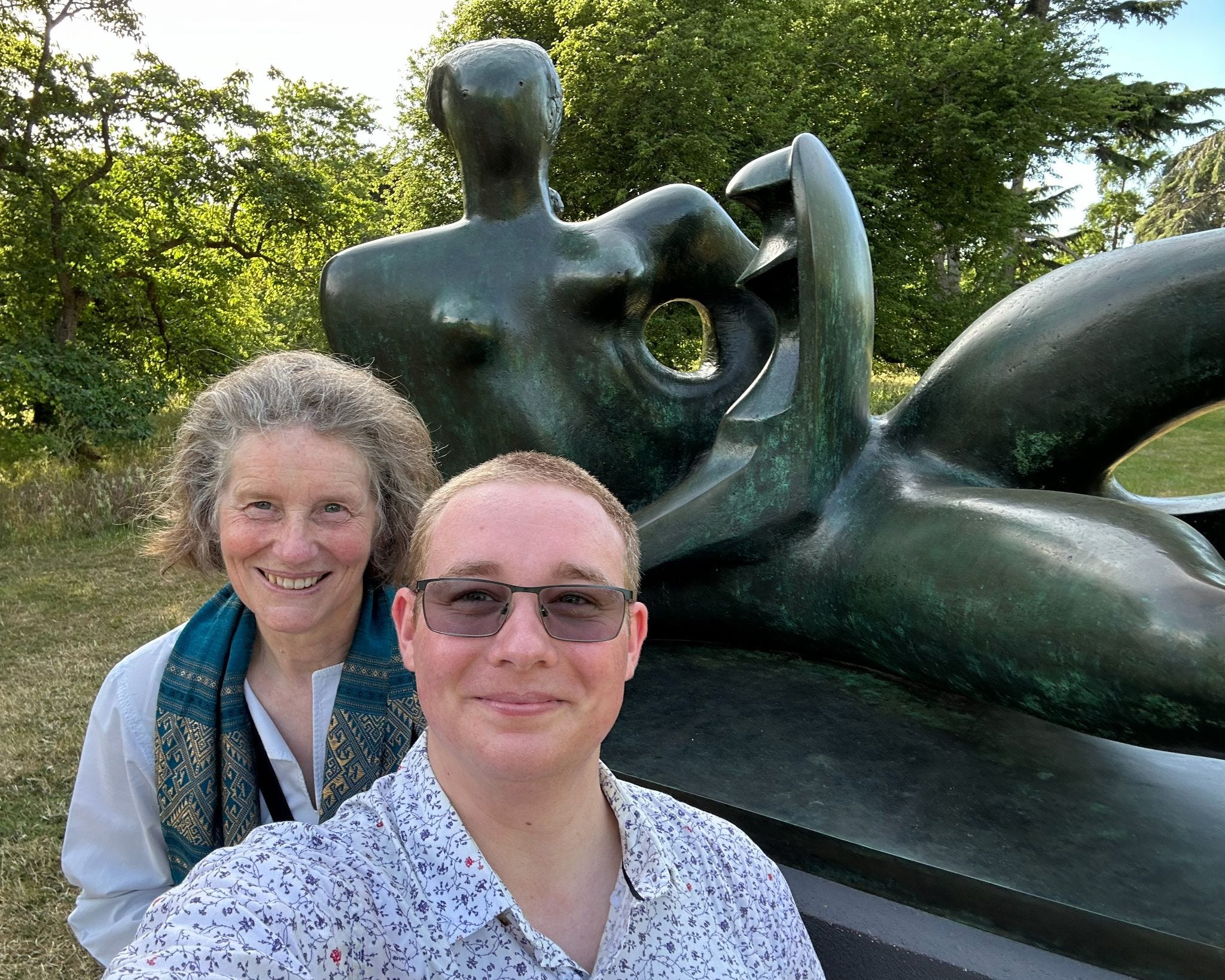
My firstborn and I fell into this role initially. It worked, and now I employ them for their critical and technical abilities. I cannot rest on fancy language. I get called out if I am being pompous. Spades are called spades. The line between being academic enough but also trying to be accessible is constantly poked and prodded. It really is felt-sense-of-safety in uncomfortable places of challenge. It feels-right.
If I need to seek another editor at any point, that is quite some job description! That would be a time when our m/other tongue is taken outside the lived experience of embodied connection, with the mother–infant relationship as the reference point for the construction of knowledge, and has to stand up to being a theory in the challenges of the ordinary world. Will it hold?
I feel stupidly excited at the somaesthetics of this editorial relationship catching me off guard, and Alex’s comment giving me a ‘you’ve been tango’d’ moment. It is another place where the mother-infant relationship is the reference point in the generation of knowledge. At the moment that is a concrete experience. My editor can’t get away from being my firstborn. But I can turn my research lens on that experience to see how I can theorise it so it can be shared as part of the heuristic process of operationalising our m/other tongue. Then the question can be asked: it’s like this for us, is it like that for you and your editor/supervisor/colleagues too?
Addition for the m/other-us-all
Felt-sense-of-safety and feels-right takes a lot of work and effort. They can’t be engineered; they have to be tended to so that they will grow when the conditions are right. The aesthetics of the process are just that - of the process. The aesthetics are embodied - somaesthetics - and so are relational and constantly evolving. Focussing on the end point of the process is therefore self-defeating - there is never an end point.
Bibliography
Heinrich, F. (2023) A somaesthetics of performative beauty: Tangoing desire and nostalgia. Routledge.
Höök, K., Stolterman, E. and Friedman, K. (2018) Designing with the Body. MIT Press.
Jones, L. F. (2023) Matrescence: On the metamorphosis of pregnancy, childbirth and motherhood. Allen Lane.
Radman, Z. (2012) Knowing without Thinking. Palgrave Macmillan
Richardson, L., & Adams St Pierre, E. (2005) Writing A Method of Inquiry. In The Sage Handbook of Qualitative Research (Third Edition, pp. 959–978).
Shusterman, R. and Sartwell, C. (2025) The Critical Shusterman. SUNY Press.
Toner, J & Montero, B. (2020) The value of aesthetic judgements in athletic performance. Somaesthetics and Beauty. 6(1), 112–126.
Tracy, S. J. (2010) Qualitative Quality: Eight “Big-Tent” Criteria for Excellent Qualitative Research. Qualitative Inquiry, 16(10), 837–851.
Zamorska, M. A. (2018) Intense Bodily Presence. Peter Lang.
Thank you for responding so thoughtfully to my question and for sharing about your relationship with your editor. I find it striking that the editorial relationship turns out to embody many of the very themes that sit at the heart of the blog: mother-child connection, embodied knowing, trust, dependency, validation and the generation of knowledge through relationship.
What stands out for me is the way the figure of the editor has been positioned within the blog over time. As I remember it, the presence of an editor was introduced in a post more than a year ago in response to concerns about monetising the blog through selling book copies, in the context of explaining the "hidden costs" involved in producing the work.
I am left interested in the contrast between what was initially foregrounded and what remained in the background. The editor was introduced as a cost of production long before they were introduced as part of the relational context from which the work itself emerges.
Given that the blog is, in many ways, an argument for taking relational and maternal ways of knowing seriously, I find myself wondering about that choice of emphasis and what it might tell us about how authority, value and legitimacy are communicated.